
Gore-Tex. Vibram. Shimano.
A common answer is: “It’s just the brand.”
But that explanation falls short.
In the sports industry, lasting value is rarely created by branding alone. It typically results from a well-designed IP strategy that is deeply embedded in the company’s business model and operational processes, including product development, quality control, and market access.
This interplay between technology, branding, and control is exactly where it gets interesting for IP practitioners. A classic example illustrates this well:
The Gore-Tex story
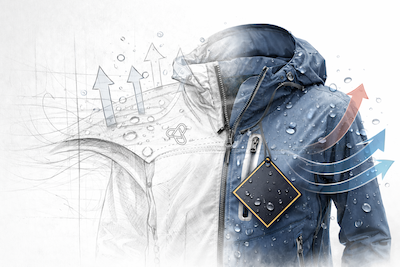 Robert “Bob” Gore was working at his father’s company, W. L. Gore & Associates, which at the time mainly produced cable insulation. According to legend, in 1969 he attempted to stretch PTFE (Teflon) to meet a customer requirement that had not yet been achieved. After several unsuccessful attempts, he pulled the material sharply. Instead of breaking, it expanded into a microporous structure. Gore-Tex was born.
From an IP perspective, what followed is highly relevant. Gore did not aim to become a sports apparel manufacturer. Instead, the company adopted an ingredient strategy: integrating its membrane into third-party products while ensuring that the Gore-Tex mark remained visible and meaningful to consumers.
This approach evolved beyond branding into a comprehensive control system: products incorporating Gore-Tex must meet strict quality standards, comply with detailed trade mark guidelines, and are subject to continuous technical improvement. Importantly, the final product requires approval before it can carry the Gore-Tex label. As a result, the trade mark functions as a reliable indicator of performance and quality.
What makes Gore-Tex especially fascinating from an IP perspective is that the core technology is invisible. The user never actually sees the membrane. The entire system therefore depends on the trade mark as a powerful proxy, supported by rigorous quality control and hard-earned trust.
Visible vs. invisible ingredient strategies
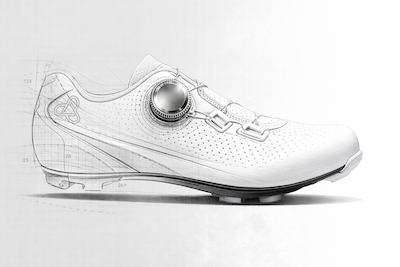 Not all technologies are hidden. In some cases, the physical component itself becomes part of the recognition signal.
Gary Hammerslag, looking for a solution to repeatedly tying his children’s boots, developed a cable-and-dial closure system with a distinctive appearance: the BOA Fit System.
Rather than producing footwear, BOA partnered with established brands but avoided a traditional licensing model. It supplies only the key hardware components to selected partners. Product development is carried out jointly with the partners through co-engineering, subject to strict integration, quality, and branding requirements. Without approval, the partner gets no scalable access to BOA components.
In this model, recognition is driven both by the brand and by the visible design. The dial itself has become an immediate visual identifier associated with precision fit.
From an IP perspective, this is where things become particularly interesting. Functional features can evolve into protected assets. Initial protection is typically based on patents and design rights. Over time, this can be complemented by position marks or three-dimensional trade marks. In addition, unfair competition law offers long-term protection, for example through protection against confusion of commercial origin, unfair imitation, or misuse of trade dress functioning as a source identifier.
Proprietary vs. open technology models
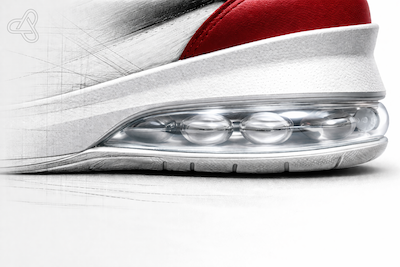 Strategic choices regarding openness also play a key role.
Some companies keep their technologies fully proprietary. Examples include Nike Air cushioning or Kästle’s Hollowtech ski construction. This approach allows for strong differentiation and higher margins, as value is captured at the level of the complete product rather than just a component. However, growth and scale are naturally limited.
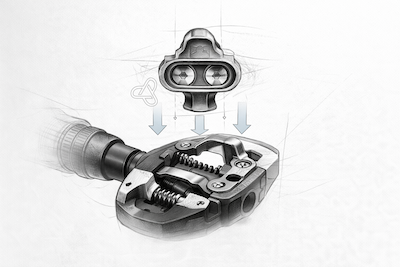 Others take the opposite route and open their systems to achieve widespread adoption. Technologies such as Shimano SPD or the Dynafit pin binding have become de facto standards, driven by compatibility requirements and network effects.
In some cases, technologies are even incorporated into formal standards. The GripWalk ski binding system, for example, has been included in ISO standards despite existing patent protection. While this can limit revenue per unit through FRAND-like mechanisms, it significantly accelerates adoption. At the same time, responsibility for complex quality control shifts from the rights holder to independent bodies such as TÜV.
Across these examples, several common principles emerge:
1. Brand anchoring
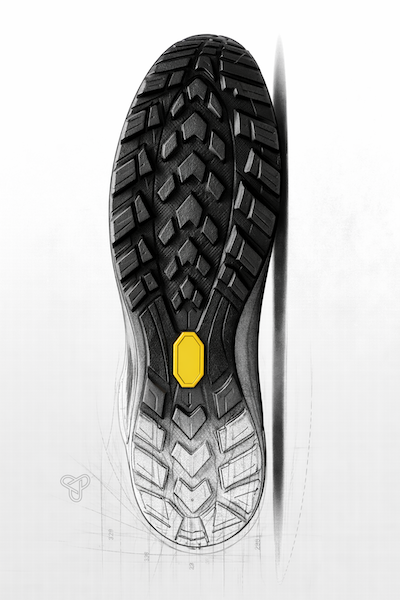
A strong recognition signal is central to many long-term protection strategies. Technologies are consistently linked to a specific name or sign. Over time, this signal becomes a trusted indicator of value, for example as a quality seal (e.g. Gore-Tex), a safety promise (e.g. MIPS), a compatibility guarantee (e.g. Shimano SPD), or a performance feature (e.g. Vibram). Effective implementation requires clear guidelines, approval processes, and quality checks. This indirectly protects the technology via trade mark law.
 2. Design anchoring
The recognition signal does not always need to be a trade mark. Visible design elements such as the BOA dial, Nike Air units, or Kästle’s Hollowtech structure can act as proxies for the underlying technology. Functional features can evolve into protected IP through design rights, patents, 3D marks or position marks and trade dress. In many cases, unfair competition law provides protection that extends beyond patent expiry.
3. Rolling IP protection
Sustainable strategies are often based on continuous incremental innovation. Overlapping protection periods ensure that relevant product generations remain covered. Partners or licensees are often required to adopt newer versions, keeping them within the scope of active IP rights.
4. Trade secrets
Not all know-how is disclosed. Formulations, manufacturing processes, and critical parameters can be kept confidential. This creates an additional layer of protection but requires strict secrecy measures, especially under European law, and always involves the risk of reverse engineering.
5. Complementary non-IP mechanisms
Finally, long-term control is also achieved through non-IP mechanisms such as contractual frameworks, ecosystem dominance via compatibility standards (e.g. Shimano SPD or GripWalk), certification regimes, and supply-side gatekeeping.
Conclusion
Long-term value is often built by turning initial IP protection into a recognition signal – linked to a value such as quality, performance, safety, compatibility, or lifestyle.
Over time, protection shifts from the technology itself to that signal, protected through trade marks, registered designs, and broader control mechanisms.
What sets successful players apart is that they reverse the sequence. They don’t develop products and then look for protection as an afterthought. They start by defining how value will be created over the long term and let that shape product development, design, and branding from the outset.
FICPI's view
FICPI uniquely combines education and advocacy on topics around patents and trade marks, with a focus on developing the professional excellence of its individual members who represent 86 countries and regions around the world world. FICPI Forums, Congress, committees and meetings are opportunities to gather insights from the international IP attorney community on any issue, whether it be practice-related or topics of patent and trade mark law, and to equip them for .
This article is part of our celebration of World IP Day 2026, whose theme is IP in sport.
Next steps
The FICPI Open Forum (16-19 September 2026) in Budapest, Hungary, is FICPI's top tier event, open to any interested party from the IP community. Find out more and register your place at: https://ficpi.org/ficpi2026
Explore the FICPI Study & Work Groups and get more involved with FICPI’s work, including its Working Group on Trade Marks (CET 1), Designs (CET 2) and on International Patent Matters (CET 3).
About the author
 Georg Puchberger is an Austrian and European patent attorney and partner at Puchberger & Partner in Vienna. As both sports and IP strategy are long-standing personal passions, the intersection of the two is a natural focus of his practice.
He advises sports equipment manufacturers, particularly in the ski and cycling sectors.
His work focuses on business-driven IP strategies that align patents, trade marks, and design rights with product development, market positioning, and long-term competitive advantage.